

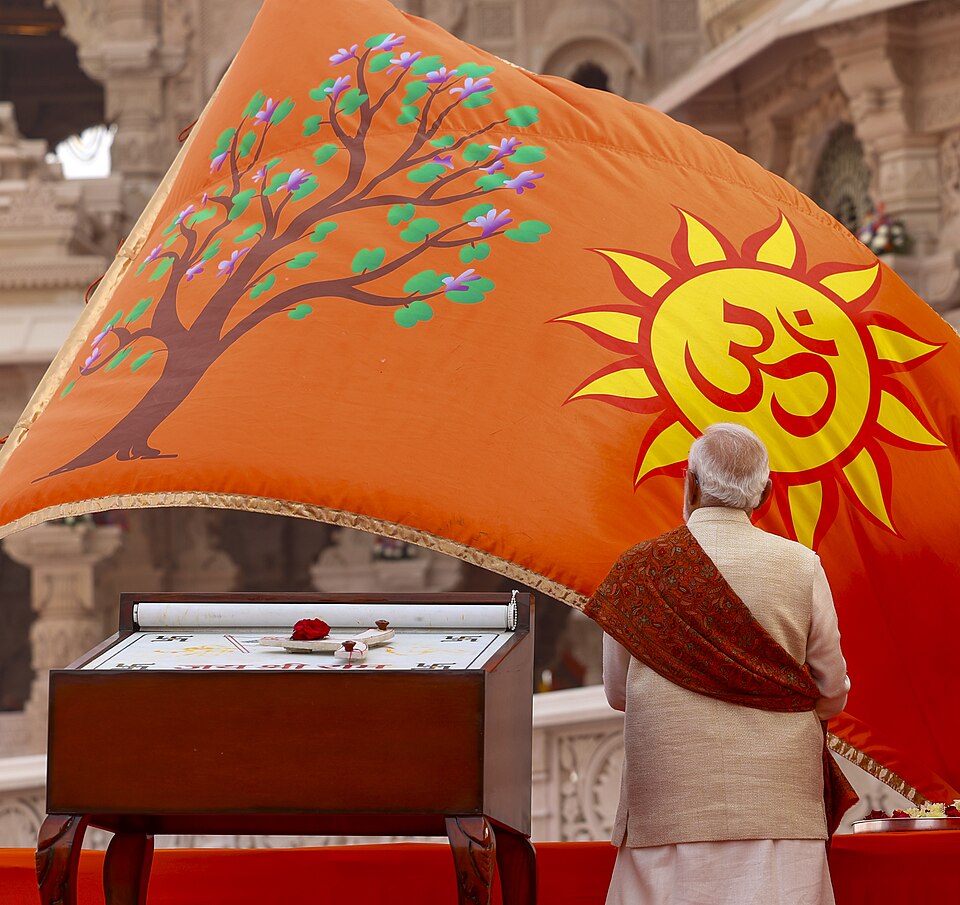
On 25th November 2025, Ayodhya witnessed a moment that will be remembered for generations. On this day, the Dharma Dhwaja was hoisted atop the newly completed Shri Ram Janmabhoomi Mandir by Prime Minister Narendra Modi. As the saffron flag rose against the sky, accompanied by mantras and the collective devotion of millions, it marked not just the fulfillment of a long-awaited dream but the beginning of a renewed spiritual era.
The event coincided with Vivaha Panchami, the divine wedding anniversary of Bhagwan Shri Ram and Mata Sita. The timing added layers of sanctity, symbolism and cosmic harmony to the ceremony. For devotees across India and the world, this day became an emotional convergence of history, faith and identity.
What the Dharma Dhwaja Represents
The Dharma Dhwaja is far more than a ceremonial flag. It is a timeless emblem of Sanatan Dharma. Its presence atop the temple signifies the completion of the sacred structure and the beginning of its spiritual life.
The flag unfurled in Ayodhya carries three key symbols.
1. The Rising Sun
The Sun symbolizes the Suryavansh, the Solar Dynasty to which Lord Rama belonged. It represents dharma, brilliance, courage and moral clarity. In ancient Indian thought, the Sun is the giver of life, light and responsibility, values embodied in Rama’s life.
2. The Sacred Syllable Om (ॐ)
Om is the primordial sound of the universe, timeless, formless and boundless. It reflects the spiritual foundation of Sanatan Dharma. Its presence on the flag binds the temple’s physical form to the cosmic essence of existence.
3. The Kovidara Tree
The Kovidara, also known as the Mandara tree, is a symbol of continuity and resilience. It appears in ancient texts and is associated with wisdom and purity. The tree reminds us that dharma is not static. It grows, adapts and sustains through generations.
Together, these symbols turn the Dharma Dhwaja into a living expression of heritage, spirituality and cultural memory.
Why the Hoisting Holds Historic Importance
The hoisting of the flag marks more than architectural completion. It signifies the spiritual inauguration of the temple and honors centuries of devotion, sacrifice and collective memory.
It represents a profound moment of cultural healing and closure for millions. It connects the present generation with a civilizational legacy stretching back thousands of years.
A Moment That Resonates Beyond Ayodhya
What happened in Ayodhya is not limited to the temple complex. It has sparked a renewed interest in Indian culture and traditions. There will now be a deeper emotional connection to Ramayana values and more conversations about dharma and heritage in everyday life.
This moment encouraged many families to reflect on their own relationship with faith, how they pray, how they celebrate and how they preserve their cultural roots at home.
What the Dharma Dhwaja Teaches Us
Beyond the symbolism and ceremony, the Dharma Dhwaj carries quiet teachings that every devotee can reflect on.
- Stand for dharma
- Stay rooted
- Shine with clarity
- Remember the eternal
These lessons apply not only to temples but to every home and every heart.
The Cultural Wave Ahead
Ayodhya’s Dharma Dhwaja moment is not a single-day event. It is the beginning of a cultural renaissance. More young people are likely to embrace ancient Indian knowledge. Temples and sacred art will find renewed expression and interest. Families will revive rituals and festivals with fresh devotion. Indian crafts, scriptures and temple traditions will gain global attention.
A Moment to Remember
The Dharma Dhwaja atop Ram Mandir is not merely a flag. It is a message. A message that dharma survives. That faith endures. That cultural memory breathes again. That truth, goodness and righteousness always find their way back to the center of society.
For a brand like Divya Mandir, which is inspired by devotion, heritage and spiritual aesthetics, such moments shape the cultural landscape in which communities reconnect with their roots.
This blog is our humble attempt to document these sacred milestones and keep the spiritual flame alive for all who cherish Sanatan values.
We will be happy to bring a replica of the Dharma Dhwaja for our discerning patrons if they desire it. Please register your interest here.
